
'As banks grapple with risk aversion and savers see an erosion in the value of money, the P2P platform can be a win-win for both borrowers and lenders,' notes Tamal Bandyopadhyay.

For the first time, consumers, including those at the so-called bottom of the pyramid, are monetising gold by taking loans from banks, offering the yellow metal as collateral, says Tamal Bandyopadhyay.

The government plans to bring down its stake to 26 per cent in these two banks, which are yet to be identified. This may not come in the way of getting investors for these banks, provided the government is willing to step back rather than run them the way it had been doing for over five decades since these banks were nationalised, points out Tamal Bandyopadhyay.
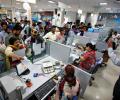
If the banks throw caution to the winds for building loan books, the hydra-headed bad loans may resurface and spoil the party, warns Tamal Bandyopadhyay.

'When resources are few; when frugality demands repairing a broken thing rather than replacing it with a brand new and expensive option, enterprising commoners in rural and urban India improvise on a daily basis and solve their problems with whatever they have,' observes Shivanand Kanavi.

While taking gold out of the closet to borrow money is no longer taboo in Indian households, the sharp drop in gold prices is hitting the newest loan product on the banking turf hard, explains Tamal Bandyopadhyay.

RBL Bank is no Yes Bank. It's not fraught with fraud. It's a story of limitless ambition and greed for growth under a leader who doesn't want to give up, says Tamal Bandyopadhyay.

The Adani stock price saga will pass into public memory as one of those matters that simply escaped being nailed down, perhaps because too many vested interests were involved, notes Debashis Basu.

The temptation to get into businesses that are hot is perhaps too great for any politician, no matter what his public slogans are. Nehru plunged into hot sectors of his time -- engineering and iron and steel. Modi has plunged into digital payments -- the hot sector of his time, notes Debashis Basu.
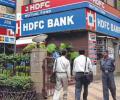
But there are challenges, observes Tamal Bandyopadhyay.

One smells a rat when cases are settled for too small a price offered either by the highest bidder or the promoter -- within and outside the legal ambit of insolvency process, observes Tamal Bandyopadhyay.

Its obsession for growth, chasing corporate clients and giving up its original mandate of meeting the needs of local trade and businesses. A quarter of its loan book has gone bad. That's an error of business strategy, points out Tamal Bandyopadhyay.

Many banks' profits will take a hit and a few of them could even end up being in the red because of treasury losses, triggered by a sudden spike in government bond yields in the rising interest rate cycle, notes Tamal Bandyopadhyay.

Every political party loves to use the bait of loan waiver to woo the electorate. If their hearts bleed for the poor, they can always use the party funds to pay off the lenders, suggests Tamal Bandyopadhyay.

'Like doctors, health workers, police, bankers are also COVID warriors,' notes Tamal Bandyopadhyay.

Shifting to floating rate deposits can work as an anaesthetic gel for some customers, points out Tamal Bandyopadhyay.

Banks feel happy shifting their toxic assets from loan books to investment books while the ARCs enjoy the management fees with a smile, observes Tamal Bandyopadhyay.

Fintechs need to behave with responsibility and transparency. A lot of mis-selling has been happening. Other issues have been plaguing the fledgling industry -- high interest rates, even higher processing fees, harsh collection process and, most critically, data leakage leading to rampant frauds, points out Tamal Bandyopadhyay.

The nod by the Heritage Conservation Committee came nearly a week after the Supreme Court asked the Centre to seek prior approval from the panel and other relevant authorities before starting construction of the new parliament building.

What will be its impact on the banks's balance sheets? Since banks need to provide for 10 per cent of the loans restructured, they would need Rs 50,000 crores to Rs 80,000 crore for this purpose, notes Tamal Bandyopadhyay.

'Banking is a business of trust.'

With the rise in interest rates, bond yields have been on the rise; this will dent banks' treasury profits. Also, many retail borrowers may find it difficult to service their loans when the loan rates rise, points out Tamal Bandyopadhyay.

Penalty must act as a deterrent. If it is too low, it could encourage the regulated entities to lap up penalty instead of complying with the norms, suggests Tamal Bandyopadhyay.

The RBI has shelved its plan for polymer notes more than a decade after it invited interest from global manufacturers for one billion pieces of Rs 10 denomination polymer banknotes, reveals Tamal Bandyopadhyay.

Barring stray references such as the 'dual control' of banks and shifting the goalposts during demonetisation, he is not in a fault-finding mode with the government, notes Tamal Bandyopadhyay.

DDinesh Kumar Khara is someone who cares for others's ideas and suggestions.
If he takes the people along with him (which he always does); cares for the customers (80 per cent of SBI's new customers are in the 20-40 age group); and doesn't take his eyes off technology, his job is done, says Tamal Bandyopadhyay.

Women dominate Indian banks's clerical and officer rolls, but few make it to the executive office these days, notes Tamal Bandyopadhyay.

If the CBDCs don't offer interest, why will people shift from cash to CBDCs?, asks Tamal Bandyopadhyay.

Tamal Bandyopadhyay offers some unsolicited advice for a government wh,ich came to power, with brute majority and the nation's pragmatic chief money man.

'In times of recovery, we may see a rural-urban divide with the urban pockets affected more by COVID-19, but the MFI business model should encourage banks to handhold them in this hour of crisis,' notes Tamal Bandyopadhyay.

There will be different ways of returning the money, depending on the profile of the depositors and the amount, predicts Tamal Bandyopadhyay.

If banks cannot charge interest from borrowers during the moratorium, who will bear that cost? Should the depositors subsidise the borrowers by foregoing interest on deposits? In that case, we will turn banking on its head! notes Tamal Bandyopadhyay.

Finance Minister Nirmala Sitharaman's Rs 30,600 crore government guarantee for the bad bank has changed the body language of bankers for the better, observes Tamal Bandyopadhyay.

As lobbying and counter-lobbying intensify, right now, it looks like a T20 match, discovers Tamal Bandyopadhyay.

'We may bite the bullet and draw up plans for privatisation.' 'If that is done now, the sale of the government stake will fetch money; a delay will see erosion in whatever value is left in these banks,' says Tamal Bandyopadhyay.

In the new decade, the scene will change because the banks till recently had been challenged by the fintechs, but the techfins have now entered the arena, observes Tamal Bandyopadhyay.

Under the watchful eyes of five wise men, who know the industry well, banks will not find it easy to hoodwink the system, says Tamal Bandyopadhyay.

Is the RBI unable to accept with grace that beyond 55, one can have the ability to head the compliance functions in a bank, asks Tamal Bandyopadhyay.
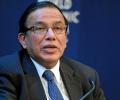
The account turned bad before Chaudhari took over as SBI chairman and the asset was sold to AARC following an open bidding process, months after Chaudhari retired, explains Tamal Bandyopadhyay.

'The PSBs ended up recording Rs 7,709 crore losses in the March quarter compared to the Rs 11,688 crore profits of their private peers,' reveals Tamal Bandyopadhyay.
